
The Evolution of Custom Fabrication Services: How Digital Supply Networks Are Redefining Production
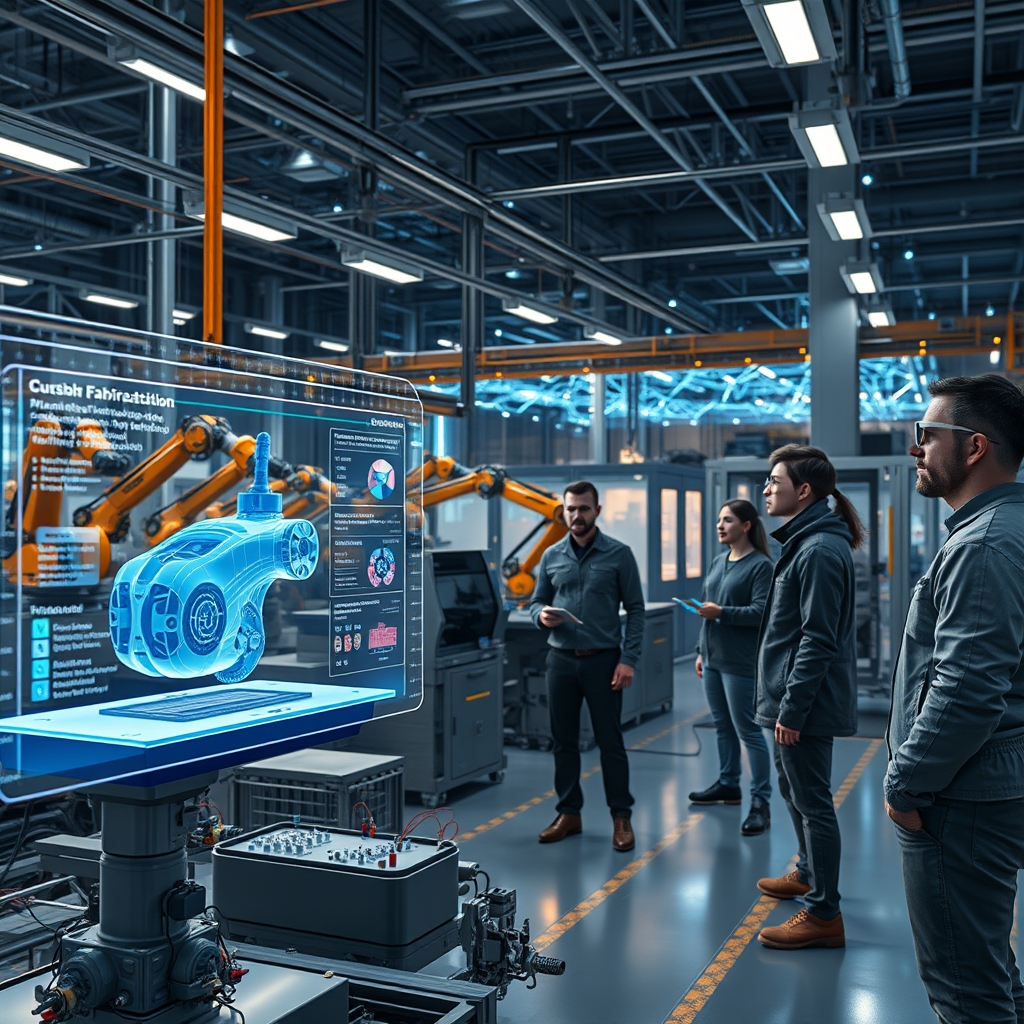
In an era where agility and precision define market leadership, custom fabrication services are undergoing a profound transformation. The shift from traditional manufacturing models to digital supply networks is not just a trend—it’s a fundamental reimagining of how products are designed, produced, and delivered. Businesses that once relied on lengthy lead times and rigid production schedules are now embracing a new paradigm, one where flexibility, speed, and customization are the cornerstones of success.
The Digital Backbone of Modern Fabrication
At the heart of this evolution lies the integration of digital supply networks, which connect disparate elements of the production process into a cohesive, data-driven ecosystem. Unlike conventional supply chains, which often operate in silos, digital networks enable real-time collaboration between designers, manufacturers, and suppliers. This interconnectedness allows for seamless communication, reducing errors and accelerating decision-making. For instance, a designer in Berlin can upload a 3D model to a cloud manufacturing platform, where it is instantly accessible to a fabricator in Shenzhen, who can then provide instant feedback on material feasibility or production constraints.
These platforms are not merely tools for communication; they are intelligent systems that leverage artificial intelligence and machine learning to optimize every stage of the fabrication process. From automated order management to predictive analytics for demand forecasting, digital supply networks are eliminating inefficiencies that have long plagued the industry. The result is a leaner, more responsive production cycle that can adapt to changing market demands with unprecedented speed.
The Role of Automated Order Management
One of the most significant advancements in custom fabrication is the automation of order management. Traditional procurement processes often involve a labyrinth of emails, spreadsheets, and manual approvals, which can introduce delays and errors. Automated order management systems, however, streamline this workflow by digitizing and centralizing the entire process. Purchase order automation, for example, allows businesses to generate, track, and fulfill orders with minimal human intervention. This not only reduces administrative overhead but also ensures greater accuracy and compliance with contractual terms.
Moreover, these systems are increasingly integrated with enterprise procurement platforms, creating a unified interface for managing everything from contract manufacturing orders to wholesale production ordering. For businesses that rely on just-in-time ordering, this level of automation is a game-changer. It enables them to maintain optimal inventory levels without the risk of overstocking or stockouts, thereby reducing carrying costs and improving cash flow.
From Prototyping to Full-Scale Production: The Power of On-Demand Manufacturing
The rise of on-demand manufacturing has democratized access to custom fabrication services, making it possible for businesses of all sizes to bring their ideas to life. Rapid prototyping orders, once the domain of large corporations with deep pockets, are now accessible to startups and independent designers. Digital fabrication technologies like 3D printing, CNC machining, and laser cutting have drastically reduced the time and cost associated with creating prototypes, allowing for faster iteration and innovation.
But the impact of on-demand manufacturing extends beyond prototyping. Batch production services are now more flexible than ever, enabling businesses to produce small quantities of custom products without the need for large minimum order quantities. This shift is particularly beneficial for niche markets, where demand may be unpredictable or highly specialized. For example, a company specializing in custom automotive parts can now fulfill orders for a single vehicle without the financial burden of producing hundreds of units upfront.
Tracking and Transparency: The New Standard in Manufacturing
In an industry where timing and precision are critical, manufacturing order tracking has become an essential feature of modern fabrication services. Digital supply networks provide end-to-end visibility into the production process, allowing businesses to monitor the status of their orders in real time. This transparency is not just about peace of mind; it’s a strategic advantage. By knowing exactly where an order stands—whether it’s in design, production, or shipping—businesses can make informed decisions about inventory, logistics, and customer communications.
For contract manufacturing orders, this level of tracking is particularly valuable. Companies outsourcing production to third-party fabricators can now ensure that their partners adhere to agreed-upon timelines and quality standards. If a delay occurs, the system can automatically trigger alerts, enabling proactive problem-solving before the issue escalates. This level of accountability fosters stronger partnerships and reduces the risk of costly disruptions.
The Future of Custom Fabrication: A Connected Ecosystem
As digital supply networks continue to evolve, the future of custom fabrication will be defined by even greater connectivity and intelligence. Cloud manufacturing platforms are already beginning to incorporate advanced features like production scheduling software, which uses AI to optimize workflows and allocate resources more efficiently. These tools can dynamically adjust production schedules based on real-time data, such as machine availability, labor capacity, and material lead times, ensuring that orders are fulfilled as quickly and cost-effectively as possible.
Another emerging trend is the integration of original equipment ordering with inventory restocking systems. Businesses can now automate the replenishment of components or raw materials based on usage patterns, reducing the need for manual intervention. This not only streamlines operations but also minimizes the risk of production halts due to material shortages. For industries with complex supply chains, such as aerospace or medical devices, this level of automation is critical for maintaining compliance and meeting stringent quality standards.
The convergence of these technologies is creating a manufacturing landscape that is more agile, transparent, and customer-centric than ever before. Businesses that embrace these innovations will not only gain a competitive edge but also redefine what is possible in custom fabrication. The days of one-size-fits-all production are fading, replaced by a new era where every product can be tailored to the unique needs of the customer, and every order can be fulfilled with precision and speed. As the boundaries of manufacturing continue to expand, one thing is clear: the future belongs to those who can adapt, innovate, and connect.



