The Future of Manufacturing: How On Demand Production is Revolutionizing Supply Chains
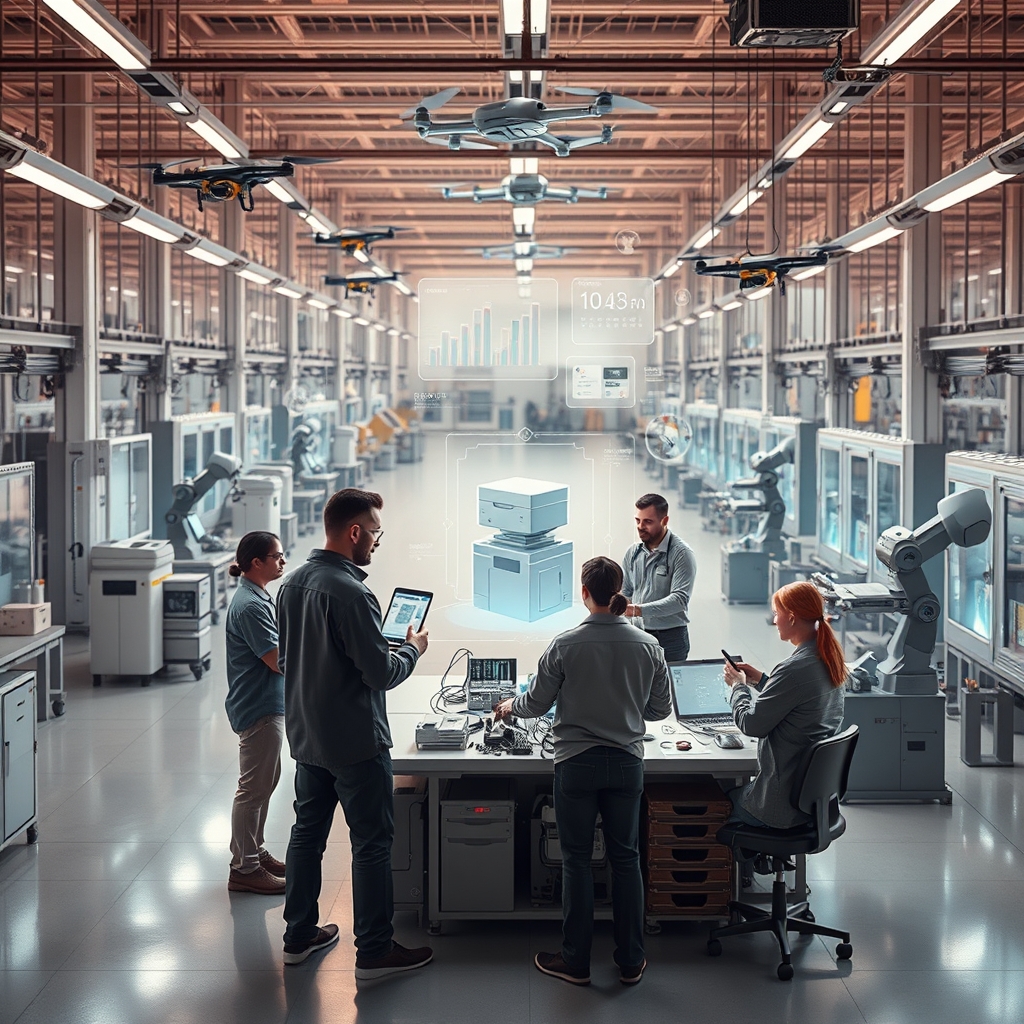
The manufacturing landscape is undergoing a seismic shift, driven by technological advancements and evolving consumer expectations. At the heart of this transformation is on demand manufacturing, a model that prioritizes flexibility, efficiency, and customization over the traditional mass-production approach. This paradigm shift is not just a trend but a fundamental reimagining of how products are designed, produced, and delivered, enabling businesses to respond to market demands with unprecedented agility.
The Rise of Custom Production Ordering
Gone are the days when businesses had to commit to large, inflexible production runs to achieve economies of scale. Today, custom production ordering allows companies to tailor products to specific customer needs without the burden of excess inventory. This approach is particularly valuable in industries where personalization is key, such as fashion, automotive, and consumer electronics. By leveraging digital platforms, businesses can now accept orders for bespoke products and produce them in smaller, more manageable batches, reducing waste and improving customer satisfaction.
For example, a footwear brand can now offer customers the ability to design their own shoes, selecting everything from materials to colors and even adding personalized text. The order is then sent directly to a manufacturing partner who produces the item on demand, eliminating the need for large warehouses filled with unsold stock. This level of customization was once a luxury reserved for high-end markets, but advancements in automated order management and cloud manufacturing platforms have made it accessible to businesses of all sizes.
Automating the Order-to-Production Pipeline
One of the biggest challenges in traditional manufacturing is the complexity of managing orders, especially when dealing with multiple suppliers, production facilities, and distribution channels. Purchase order automation and enterprise procurement platforms are streamlining this process by integrating every step of the supply chain into a single, cohesive system. These platforms use artificial intelligence and machine learning to predict demand, optimize production schedules, and even automate reordering of raw materials, ensuring that businesses can meet customer needs without overcommitting resources.
Consider the case of a company that relies on just in time ordering to maintain lean inventory levels. With automated systems in place, the moment a customer places an order, the platform can trigger the production process, allocate resources, and schedule delivery—all without human intervention. This not only reduces lead times but also minimizes the risk of errors, such as overproduction or stockouts. Additionally, manufacturing order tracking tools provide real-time visibility into the status of each order, allowing businesses to keep customers informed and manage expectations effectively.
The Role of Digital Supply Networks
At the core of this transformation are digital supply networks, which connect manufacturers, suppliers, and logistics providers in a seamless, interconnected ecosystem. Unlike traditional linear supply chains, these networks are dynamic and adaptive, capable of rerouting orders and adjusting production in response to disruptions or changes in demand. For instance, if a supplier experiences a delay, the system can automatically identify alternative sources and adjust production schedules accordingly, ensuring that customer orders are fulfilled without delay.
Cloud-based platforms are the backbone of these networks, enabling real-time collaboration and data sharing across the entire supply chain. Businesses can now monitor inventory levels, track shipments, and even predict potential bottlenecks before they occur. This level of transparency and control is particularly valuable in industries with complex supply chains, such as aerospace or medical devices, where precision and reliability are paramount.
Empowering Businesses with Rapid Prototyping and Batch Production
Innovation is the lifeblood of any industry, and rapid prototyping orders are accelerating the pace of product development. Traditionally, creating a prototype could take weeks or even months, delaying time-to-market and increasing costs. However, with advancements in 3D printing and other additive manufacturing technologies, businesses can now produce prototypes in a matter of days—or even hours. This not only speeds up the design process but also allows companies to test and refine products before committing to full-scale production.
Similarly, batch production services are enabling businesses to produce small quantities of products without the high setup costs associated with traditional manufacturing. This is particularly useful for startups or companies testing new markets, as it allows them to gauge demand before scaling up. For example, a cosmetics brand can produce a limited run of a new product to test consumer interest, then adjust formulations or packaging based on feedback before launching a larger production run.
The Impact on Industrial Order Fulfillment
The shift toward on demand manufacturing is also reshaping industrial order fulfillment. In the past, businesses often had to rely on large, centralized warehouses to store finished goods, leading to high overhead costs and inefficiencies. Today, distributed manufacturing models allow products to be produced closer to the point of consumption, reducing shipping times and costs. This is especially beneficial for businesses operating in global markets, where long lead times and high shipping costs can erode profit margins.
Moreover, inventory restocking systems powered by AI are helping businesses maintain optimal stock levels without the guesswork. These systems analyze historical sales data, market trends, and even external factors like weather or economic conditions to predict demand and trigger reorders automatically. This not only reduces the risk of stockouts or overstocking but also frees up capital that would otherwise be tied up in excess inventory.
The manufacturing industry is at a crossroads, with on demand production offering a path to greater efficiency, sustainability, and customer-centricity. As businesses continue to embrace these innovations, the lines between design, production, and delivery will blur, creating a more responsive and resilient supply chain. The future of manufacturing is not just about producing goods—it’s about creating value in ways that were once unimaginable, and those who adapt will lead the way in this new era of industrial evolution.