
How AI-Driven Hyper Personalization is Redefining Customer Experience in the Digital Age
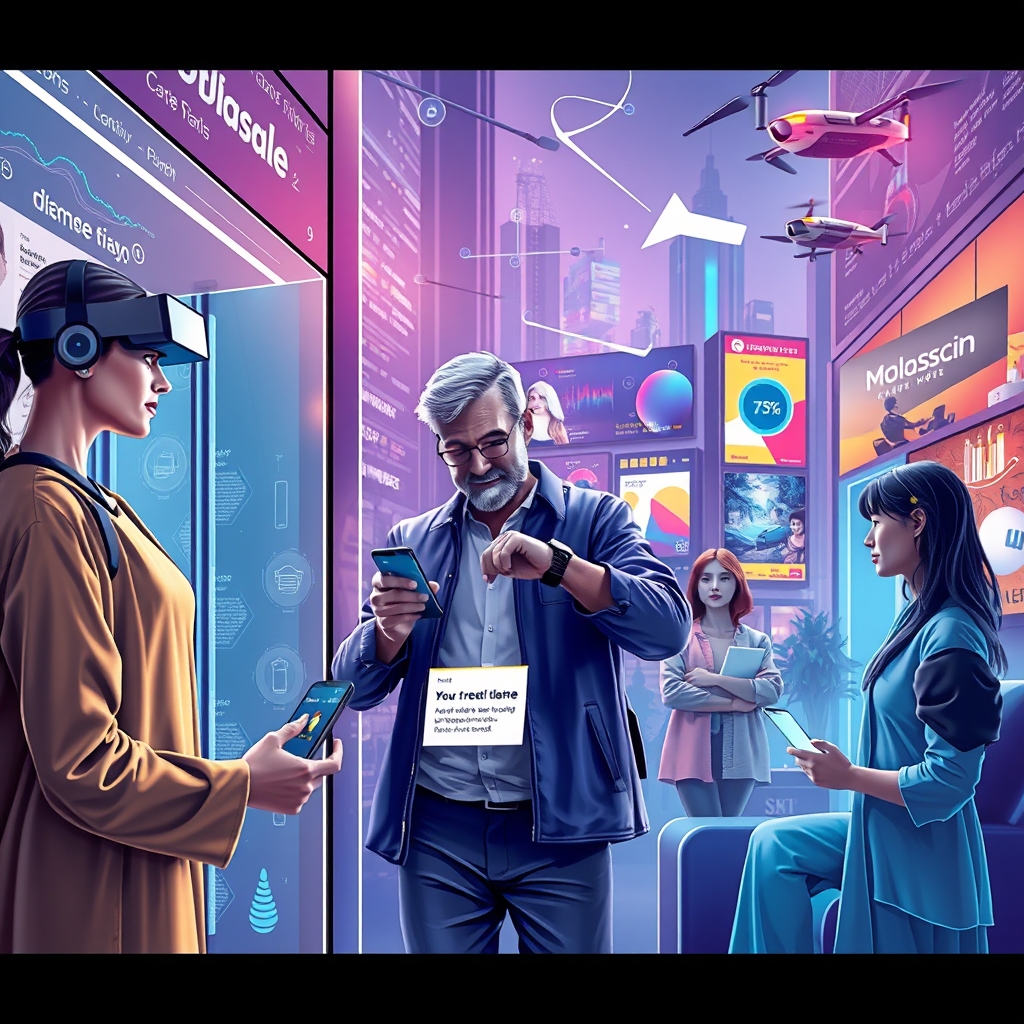
In an era where digital transformation is not just a buzzword but a business imperative, companies are racing to adopt technologies that can give them a competitive edge. Among these, artificial intelligence (AI) stands out as a game-changer, particularly in how it enables hyper personalization—a strategy that tailors experiences, products, and services to individual customer preferences with unprecedented precision. This shift is not merely about improving customer satisfaction; it’s about redefining the very fabric of customer experience (CX) in ways that were unimaginable a decade ago.
The Rise of Hyper Personalization
Hyper personalization goes beyond traditional personalization by leveraging real-time data, AI, and advanced analytics to deliver highly contextual and relevant interactions. Unlike generic marketing campaigns or one-size-fits-all solutions, hyper personalization considers a customer’s past behaviors, current context, and even predicted future actions. For example, streaming platforms like Netflix and Spotify use AI algorithms to analyze viewing or listening habits, then recommend content that aligns with individual tastes. This level of customization fosters deeper engagement and loyalty, as customers feel understood and valued on a personal level.
But hyper personalization isn’t limited to entertainment. Retailers like Amazon and Sephora use AI-driven tools to offer personalized product recommendations, dynamic pricing, and even virtual try-ons. Financial institutions deploy AI to provide customized financial advice, fraud detection, and tailored loan offers. The common thread? Data. The more data a company can collect and analyze, the more accurately it can predict and meet customer needs.
The Role of AI in Enabling Hyper Personalization
At the heart of hyper personalization is AI, which processes vast amounts of data at speeds and scales that humans simply cannot match. Machine learning (ML) models, a subset of AI, continuously learn from customer interactions, refining their predictions and recommendations over time. Natural language processing (NLP) enables chatbots and virtual assistants to understand and respond to customer queries in a conversational manner, further enhancing the personalized experience.
For instance, AI-powered customer service platforms can analyze a customer’s tone, sentiment, and past interactions to tailor responses that address their specific concerns. This not only resolves issues more efficiently but also makes customers feel heard and appreciated. Similarly, AI-driven marketing tools can segment audiences with laser precision, delivering content that resonates with each individual’s preferences, location, and even the time of day they’re most likely to engage.
Challenges and Ethical Considerations
While the benefits of hyper personalization are clear, it’s not without its challenges. One of the biggest hurdles is data privacy. Customers are increasingly aware of how their data is being used, and they expect transparency and control. Companies must strike a delicate balance between personalization and privacy, ensuring they comply with regulations like the General Data Protection Regulation (GDPR) and the California Consumer Privacy Act (CCPA). Failure to do so can result in reputational damage, legal penalties, and a loss of customer trust.
Another challenge is the risk of over-personalization, where customers feel their privacy is being invaded. For example, if a customer receives an ad for a product they casually mentioned in a private conversation, it can feel creepy rather than convenient. Companies must tread carefully, ensuring that personalization enhances the customer experience without crossing ethical boundaries.
The Future of Customer Experience
As AI continues to evolve, so too will the possibilities for hyper personalization. Predictive modeling, for instance, will enable companies to anticipate customer needs before they even arise. Imagine a grocery app that not only suggests recipes based on your past purchases but also predicts when you’ll run out of a staple item and offers a one-click reorder option. Or a healthcare provider that uses AI to monitor patient data in real-time, alerting them to potential health issues before they become serious.
Moreover, the integration of AI with other emerging technologies like the Internet of Things (IoT) and augmented reality (AR) will create even more immersive and personalized experiences. For example, smart home devices could learn a user’s preferences for lighting, temperature, and entertainment, adjusting automatically to create the perfect environment. AR could enable virtual shopping experiences where customers can try on clothes or test products in their own homes before making a purchase.
Building a Customer-Centric Culture
However, technology alone is not enough to deliver exceptional customer experiences. Companies must also foster a customer-centric culture that prioritizes empathy, transparency, and continuous improvement. This means training employees to understand the value of personalization and equipping them with the tools they need to deliver it. It also means being open to feedback and willing to adapt based on customer insights.
For example, companies like Zappos and Apple have built their reputations on exceptional customer service, not just cutting-edge technology. They understand that personalization is as much about human connection as it is about data and algorithms. By combining the best of both worlds—AI-driven insights and human empathy—businesses can create experiences that are not only personalized but also meaningful and memorable.
The digital age has ushered in a new era of customer expectations, where generic interactions no longer suffice. In this landscape, hyper personalization powered by AI is not just a competitive advantage; it’s a necessity for survival. Companies that embrace this shift will not only meet the evolving demands of their customers but also forge deeper, more lasting relationships. The key lies in using technology responsibly, ethically, and in a way that enhances—not replaces—the human touch. As we look to the future, one thing is clear: the businesses that thrive will be those that understand their customers not just as data points, but as individuals with unique needs, desires, and stories.



