
Revolutionizing Supply Chain Logistics with Warehouse Robotics and AI-Driven Automation
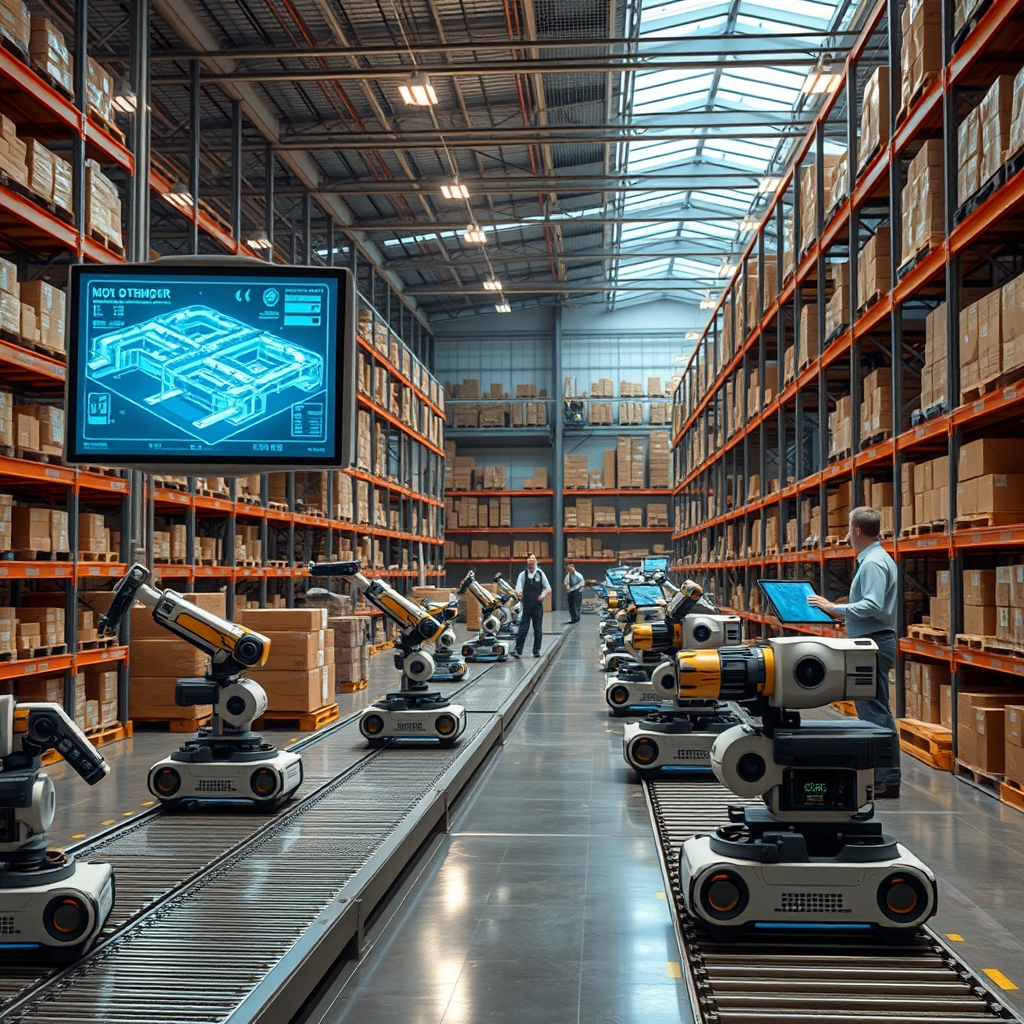
In the fast-paced world of modern manufacturing, supply chain logistics has emerged as a critical battleground for efficiency, cost reduction, and competitive advantage. As industries strive to meet the demands of just-in-time production and ever-shrinking delivery windows, the integration of warehouse robotics and AI-driven automation is transforming traditional logistics operations into highly optimized, intelligent systems. This shift is not merely about replacing human labor with machines; it’s about creating a symbiotic ecosystem where technology enhances human capabilities, reduces errors, and accelerates throughput.
The Rise of Warehouse Robotics in Supply Chain Logistics
Warehouse robotics has evolved from simple automated guided vehicles (AGVs) to sophisticated autonomous mobile robots (AMRs) capable of navigating complex environments with minimal human intervention. These robots are equipped with advanced sensors, computer vision, and machine learning algorithms that enable them to perform tasks such as picking, packing, sorting, and transporting goods with unparalleled precision. Companies like Amazon, Alibaba, and Ocado have already demonstrated the transformative potential of robotics in logistics, achieving significant improvements in order fulfillment speed and accuracy.
One of the most compelling advantages of warehouse robotics is their ability to operate 24/7 without fatigue, drastically reducing lead times and increasing operational resilience. Unlike human workers, robots can seamlessly adapt to fluctuating demand, scaling their efforts up or down based on real-time data. This flexibility is particularly valuable in industries where seasonal spikes or unexpected disruptions—such as those experienced during the COVID-19 pandemic—can strain traditional supply chains to their breaking point.
Key Technologies Driving the Robotics Revolution
Several cutting-edge technologies are converging to propel warehouse robotics into the mainstream. Computer vision, powered by deep learning, allows robots to identify and handle a vast array of products, even those with irregular shapes or fragile packaging. LiDAR and SLAM (Simultaneous Localization and Mapping) technologies enable robots to navigate dynamic warehouse environments, avoiding obstacles and optimizing their routes in real time. Meanwhile, collaborative robots (cobots) are designed to work alongside human workers, taking over repetitive or physically demanding tasks while allowing humans to focus on more complex, value-added activities.
Another game-changing innovation is the integration of AI-driven predictive analytics into warehouse management systems. By analyzing historical data and current trends, these systems can forecast demand, optimize inventory placement, and even preemptively reroute shipments to avoid bottlenecks. This level of intelligence not only improves efficiency but also reduces waste, contributing to more sustainable supply chain practices.
Lean Production and Inventory Optimization: The Perfect Pairing
Warehouse robotics is not operating in isolation; it is a key enabler of lean production and inventory optimization, two pillars of modern operations management. Lean production, with its focus on eliminating waste and maximizing value, aligns perfectly with the precision and efficiency of robotic systems. By automating tasks such as inventory tracking, order picking, and stock replenishment, companies can minimize overproduction, reduce excess inventory, and streamline their workflows.
Inventory optimization, on the other hand, is about ensuring the right products are in the right place at the right time. Robotics plays a crucial role here by enabling real-time inventory visibility and dynamic slotting—the practice of strategically placing high-demand items in easily accessible locations. When combined with AI-driven demand forecasting, this approach can significantly reduce stockouts and overstock situations, leading to lower carrying costs and improved customer satisfaction.
The Role of Digital Twin Technology in Logistics
At the intersection of warehouse robotics and inventory optimization lies digital twin technology, a virtual replica of physical supply chain assets that enables real-time monitoring, simulation, and optimization. Digital twins allow logistics managers to test different scenarios—such as changes in demand, warehouse layouts, or robot deployment—without disrupting actual operations. This capability is invaluable for identifying inefficiencies, predicting potential disruptions, and continuously refining logistics strategies.
For example, a digital twin of a robotic warehouse can simulate the impact of adding more AMRs to the fleet or adjusting the layout of storage racks. By running these simulations, managers can make data-driven decisions that enhance throughput, reduce energy consumption, and improve overall system performance. The result is a more agile, responsive supply chain that can adapt to changing market conditions with minimal friction.
Sustainable Packaging and Green Manufacturing: A New Imperative
As industries embrace automation and robotics, there is a growing recognition of the need to align these advancements with sustainable packaging and green manufacturing practices. Warehouse robotics can contribute to sustainability in several ways, such as optimizing packaging processes to reduce material waste, minimizing energy consumption through efficient route planning, and enabling the use of eco-friendly materials by automating complex handling tasks.
For instance, robots equipped with AI can determine the optimal packaging size for each order, reducing the need for excess filler materials like bubble wrap or Styrofoam. Additionally, automated systems can sort and recycle packaging materials more efficiently than manual processes, further reducing the environmental footprint of logistics operations. When combined with renewable energy sources, such as solar-powered warehouses, robotics can help create a truly sustainable supply chain ecosystem.
Overcoming Challenges in Implementation
Despite the clear benefits, the adoption of warehouse robotics and AI-driven automation is not without challenges. High upfront costs, integration complexities, and workforce resistance are common hurdles that companies must navigate. However, these challenges can be mitigated through strategic planning, phased implementation, and employee training programs that emphasize the collaborative nature of human-robot workflows.
Another critical factor is the need for robust quality control systems to ensure that robotic systems operate flawlessly. Even the most advanced robots can encounter errors, such as mispicks or navigation failures, which can disrupt operations if not addressed promptly. Implementing real-time monitoring and automated error correction mechanisms can help maintain the integrity of logistics processes and prevent costly downtime.
The future of supply chain logistics is being reshaped by the convergence of robotics, AI, and automation, creating opportunities for unprecedented efficiency, flexibility, and sustainability. As these technologies continue to evolve, they will not only redefine how goods are stored, transported, and delivered but also how businesses think about their entire operations. The companies that embrace this transformation today will be the ones leading the charge into a smarter, more resilient industrial future, where the boundaries between the physical and digital worlds blur, and the possibilities are limited only by imagination.



