Harnessing Real-Time Management Dashboards for a Continuous Improvement Culture in Agile Business Processes

In today’s fast-paced business environment, organizations are increasingly recognizing the need to move beyond static reporting and embrace dynamic, real-time insights to drive decision-making. The integration of real-time management dashboards into agile business processes has emerged as a game-changer, enabling leaders to foster a continuous improvement culture while maintaining operational agility. These dashboards are not merely tools for visualization; they are catalysts for transformation, bridging the gap between data-driven management and actionable strategy.
The Foundation of Real-Time Insights
At the heart of modern operational excellence lies the ability to access and interpret data instantaneously. Traditional reporting methods, which often rely on historical data, can leave organizations reacting to challenges rather than proactively addressing them. Real-time management dashboards, however, provide a live feed of key performance indicators (KPIs), operational metrics, and strategic insights. This immediacy allows teams to identify bottlenecks, monitor workflow efficiency, and pivot strategies with minimal delay.
For example, a manufacturing company leveraging real-time dashboards can track production line performance, inventory levels, and supply chain disruptions in the moment. If a machine begins to underperform, the dashboard alerts the team instantly, enabling swift corrective action before minor issues escalate into costly downtime. This level of responsiveness is a cornerstone of lean management practices and sustainable process innovation, where waste reduction and efficiency are paramount.
Enhancing Agile Business Processes
Agility in business is not just about speed; it’s about adaptability. Real-time dashboards empower organizations to embed agility into their core processes by providing the visibility needed to make informed, rapid decisions. In an adaptive organizational culture, teams are encouraged to experiment, learn, and iterate—all of which are facilitated by real-time data.
Consider a retail organization using dashboards to monitor customer behavior across digital and physical channels. By analyzing real-time data on foot traffic, online engagement, and sales conversions, the company can dynamically adjust marketing campaigns, staffing levels, and inventory distribution. This responsiveness not only enhances customer-centric operations but also ensures that resources are optimized for maximum impact. The result is a business that doesn’t just react to change but anticipates and capitalizes on it.
The Role of Predictive Analytics
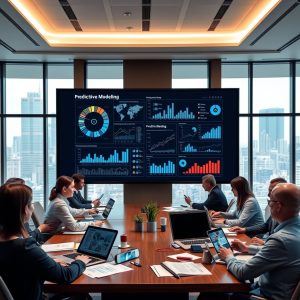
While real-time dashboards provide a snapshot of the present, their true power is unlocked when combined with predictive business analytics. By integrating machine learning and advanced algorithms, these dashboards can forecast trends, simulate scenarios, and recommend actions before issues arise. For instance, a logistics company might use predictive analytics to anticipate delivery delays based on weather patterns, traffic data, and historical performance, allowing them to reroute shipments proactively.
This forward-looking approach transforms dashboards from passive monitoring tools into active strategic assets. Leaders can move from a reactive stance to a proactive one, aligning their decisions with long-term goals while maintaining the flexibility to adapt to short-term disruptions. It’s a shift that redefines performance management systems, making them more dynamic and outcome-focused.
Fostering a Continuous Improvement Culture
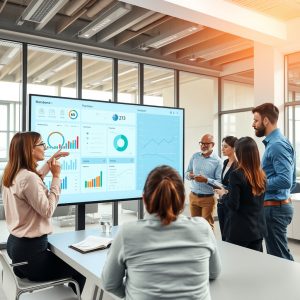
A continuous improvement culture thrives on feedback, iteration, and a shared commitment to excellence. Real-time dashboards play a pivotal role in this by democratizing data access across the organization. When teams at all levels can see how their actions impact overall performance, it fosters accountability and collaboration. Employees are no longer working in silos; they are part of a cohesive system where every contribution is visible and valued.
For example, a healthcare provider using dashboards to track patient flow, wait times, and staff productivity can identify inefficiencies in real time. Frontline staff can see how their efforts directly influence patient satisfaction scores, while managers can allocate resources more effectively. This transparency not only improves operational efficiency but also reinforces a culture of human-centric leadership, where employees feel empowered to suggest improvements and take ownership of their work.
Scalable Management Models for the Future
As organizations grow, the complexity of their operations increases. Real-time dashboards provide a scalable solution that evolves with the business, ensuring that management models remain effective regardless of size or scope. Whether an organization is expanding into new markets, onboarding additional teams, or integrating new technologies, dashboards offer a unified platform for monitoring performance and driving alignment.
Moreover, these tools support integrated digital transformation by seamlessly connecting disparate systems—ERP, CRM, supply chain management, and more—into a single, cohesive interface. This integration eliminates data silos, reduces redundancy, and ensures that decision-makers have a holistic view of the organization. It’s a shift that enables leaders to move beyond departmental optimization and focus on holistic business optimization, where every function is aligned with the broader strategic vision.
Real-time management dashboards are more than just a technological advancement; they are a cultural shift. By embedding data-driven insights into the fabric of daily operations, organizations can create a responsive, agile, and continuously improving environment. The ability to see, analyze, and act on data in the moment doesn’t just enhance efficiency—it redefines what’s possible. As businesses navigate an increasingly complex landscape, those that leverage these tools will not only stay ahead of the curve but set the standard for operational excellence in the digital age. The future belongs to those who can turn data into action, and real-time dashboards are the key to unlocking that potential.