
The Intersection of Contract Manufacturing and Smart Factories: Building Flexibility and Efficiency in Modern Production
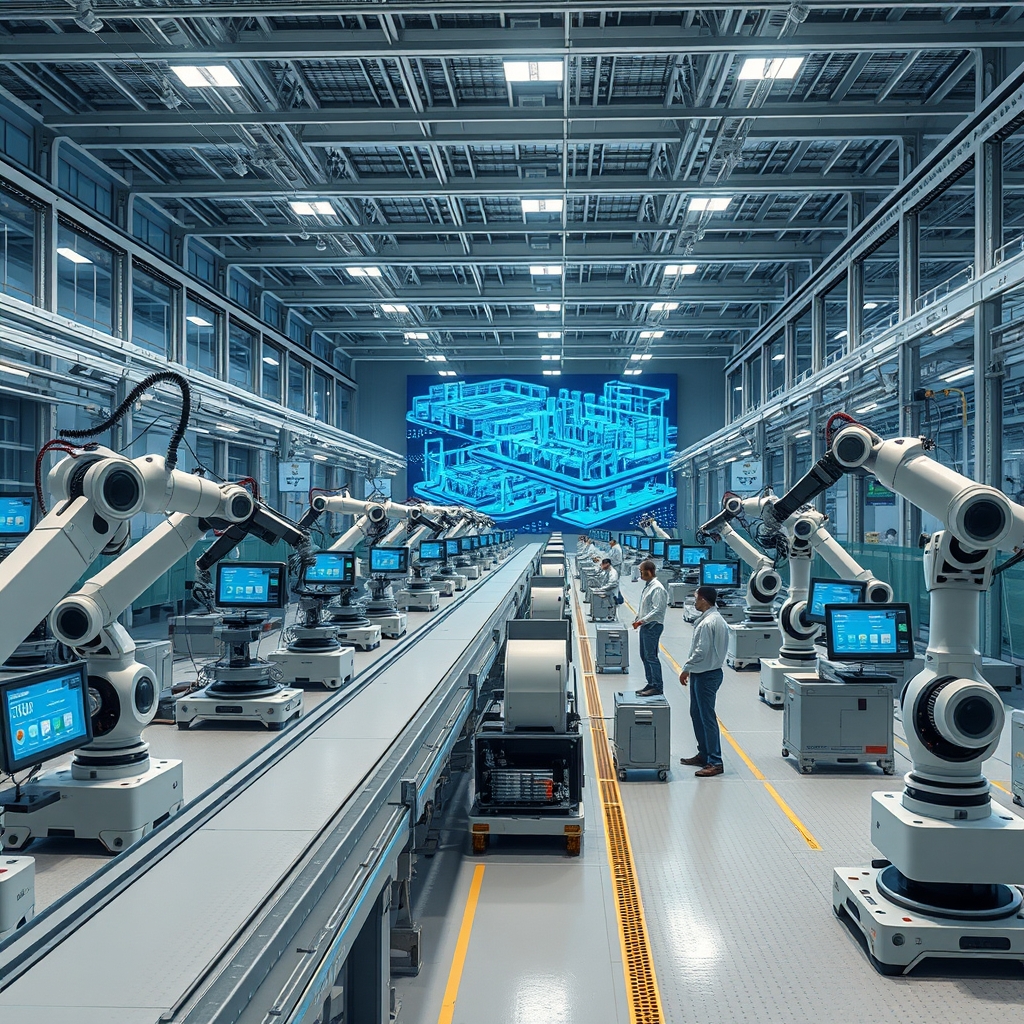
In an era where market demands shift at an unprecedented pace, manufacturers are increasingly turning to contract manufacturing as a strategic solution to enhance agility and scalability. When combined with the principles of smart manufacturing, this approach not only streamlines production but also unlocks new levels of operational efficiency. The fusion of these two domains is reshaping how businesses approach production, enabling them to respond swiftly to changing consumer needs while maintaining cost-effectiveness and high-quality standards.
The Rise of Contract Manufacturing in the Digital Age
Contract manufacturing has long been a cornerstone for businesses seeking to outsource production to specialized third-party providers. Traditionally, this model allowed companies to focus on core competencies such as design, marketing, and innovation while leveraging external expertise for manufacturing. However, the advent of smart manufacturing technologies—such as IoT, AI, and advanced robotics—has elevated contract manufacturing to new heights. Today, it is not just about outsourcing; it is about creating a seamless, data-driven partnership that enhances flexibility and reduces time-to-market.
One of the key advantages of modern contract manufacturing is its ability to integrate with digital ecosystems. Smart factories equipped with real-time monitoring systems, predictive analytics, and automated workflows enable contract manufacturers to deliver precision and consistency at scale. For instance, digital twin technology allows both the contracting company and the manufacturer to simulate production processes, identify potential bottlenecks, and optimize operations before physical production even begins. This level of collaboration ensures that both parties are aligned, reducing risks and improving overall efficiency.
How Smart Manufacturing Enhances Contract Manufacturing
The integration of smart manufacturing technologies into contract manufacturing brings several transformative benefits. First and foremost is the ability to achieve mass customization without sacrificing efficiency. Traditional manufacturing often struggles with the trade-off between customization and mass production. However, smart factories equipped with adaptive robotics, AI-driven quality control systems, and modular production lines can quickly reconfigure processes to accommodate varying product specifications. This capability is particularly valuable for industries like electronics, automotive, and consumer goods, where demand for personalized products is on the rise.
Another critical advantage is inventory optimization. Smart manufacturing enables real-time tracking of raw materials, work-in-progress, and finished goods through IoT-enabled sensors and enterprise resource planning (ERP) systems. Contract manufacturers can leverage this data to maintain optimal inventory levels, reducing waste and minimizing storage costs. Additionally, predictive analytics can forecast demand fluctuations, allowing manufacturers to adjust production schedules dynamically and avoid overproduction or stockouts.
The Role of Automation in Quality Control
Quality control is a non-negotiable aspect of manufacturing, and smart technologies are revolutionizing how it is executed in contract manufacturing. Automated inspection systems powered by computer vision and machine learning can detect defects with greater accuracy and speed than human inspectors. These systems can analyze thousands of units per hour, ensuring that only products meeting stringent quality standards reach the market. Furthermore, AI-driven quality control systems can learn from historical data, continuously improving their ability to identify and address potential issues before they escalate.
For contract manufacturers, this level of automation not only enhances product quality but also builds trust with clients. Companies outsourcing their production can rest assured that their brand reputation is safeguarded by cutting-edge quality control measures. This trust is further reinforced by the transparency offered by smart manufacturing technologies, where clients can access real-time data on production status, quality metrics, and delivery timelines through integrated dashboards.
Sustainability: A Shared Responsibility
As global awareness of environmental issues grows, sustainability has become a critical consideration in manufacturing. Contract manufacturers and their clients are increasingly adopting green manufacturing practices to minimize their ecological footprint. Smart factories play a pivotal role in this transition by enabling energy-efficient production processes, reducing material waste, and optimizing resource utilization. For example, AI-driven systems can analyze energy consumption patterns and suggest adjustments to reduce usage during peak hours, lowering both costs and carbon emissions.
Sustainable packaging is another area where contract manufacturing and smart technologies intersect. Advanced materials, such as biodegradable or recyclable packaging, are being integrated into production lines with the help of automated systems. These systems ensure that packaging is not only eco-friendly but also cost-effective and scalable. By adopting such practices, contract manufacturers can appeal to environmentally conscious clients and consumers, further strengthening their market position.
Overcoming Challenges in Integration
While the benefits of combining contract manufacturing with smart factories are clear, the integration process is not without its challenges. One of the primary hurdles is the initial investment required to adopt smart technologies. For many contract manufacturers, especially small and medium-sized enterprises (SMEs), the cost of implementing IoT devices, AI systems, and automation can be prohibitive. However, the long-term return on investment—through increased efficiency, reduced waste, and improved quality—often justifies the expenditure.
Another challenge is the need for skilled labor to operate and maintain smart manufacturing systems. The shift toward automation and digitalization requires a workforce proficient in data analytics, robotics, and AI. Contract manufacturers must invest in training and upskilling their employees to bridge this gap. Collaborating with educational institutions and technology providers can help create a pipeline of talent equipped to thrive in the smart manufacturing landscape.
The fusion of contract manufacturing and smart factories represents a paradigm shift in how businesses approach production. By leveraging digital technologies, manufacturers can achieve unprecedented levels of flexibility, efficiency, and sustainability. This synergy not only enables companies to meet the demands of a rapidly evolving market but also positions them for long-term success in an increasingly competitive landscape. As technology continues to advance, the possibilities for innovation in contract manufacturing are limitless, offering a glimpse into the future of industrial production where agility and intelligence go hand in hand.



