
Agile Manufacturing and Mass Customization: The Next Frontier in Industrial Automation
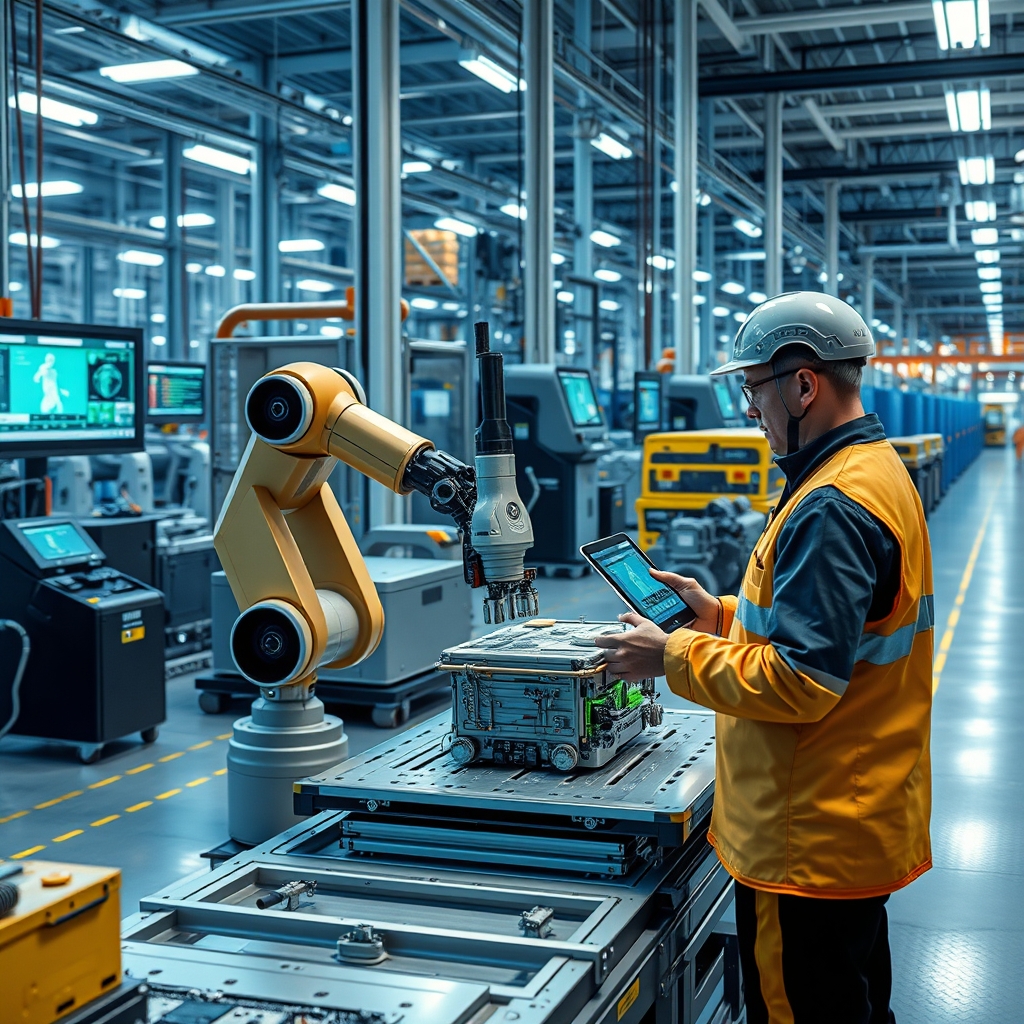
In an era where consumer demands shift at lightning speed, manufacturers are under increasing pressure to deliver highly personalized products without sacrificing efficiency or profitability. The traditional mass production model, once the backbone of industrial success, is no longer sufficient. Enter agile manufacturing and mass customization—two transformative approaches that are reshaping the landscape of industrial automation. By leveraging cutting-edge technologies and flexible production systems, businesses are not only meeting the demands of today’s market but also future-proofing their operations for the challenges ahead.
The Evolution of Manufacturing: From Mass Production to Mass Customization
For decades, mass production reigned supreme, enabling companies to produce large quantities of standardized products at low costs. Henry Ford’s assembly line epitomized this approach, revolutionizing industries by making goods accessible to the masses. However, the one-size-fits-all model has its limitations. Today’s consumers crave uniqueness, whether it’s a smartphone with a custom engraving, a pair of sneakers tailored to their foot shape, or a car configured to their exact preferences. This shift in consumer behavior has given rise to mass customization, a strategy that combines the efficiency of mass production with the personalization of bespoke manufacturing.
Mass customization is not a new concept, but recent advancements in industrial automation, digital twin technology, and AI-driven operations management have made it more viable than ever. Companies like Nike, with its Nike By You platform, and Tesla, with its online configurator, have demonstrated how mass customization can be scaled without compromising on speed or quality. The key lies in modular production systems, where components can be easily swapped or adjusted to create a wide variety of end products. This flexibility is the cornerstone of agile manufacturing, allowing businesses to respond rapidly to changing market trends and customer preferences.
Agile Manufacturing: The Backbone of Flexible Production
Agile manufacturing is more than just a buzzword—it’s a holistic approach to production that prioritizes adaptability, speed, and collaboration. Unlike traditional manufacturing, which relies on rigid processes and long lead times, agile manufacturing embraces change as an opportunity rather than a disruption. This philosophy is particularly valuable in industries where product lifecycles are short, and innovation is constant, such as electronics, fashion, and automotive.
At the heart of agile manufacturing is the integration of smart manufacturing technologies. Factory automation systems, powered by robotics and AI, enable real-time adjustments to production lines, reducing downtime and minimizing waste. For example, collaborative robots (cobots) can work alongside human operators to assemble customized products, while predictive maintenance systems ensure that machinery remains operational, preventing costly delays. Additionally, enterprise resource planning (ERP) and material requirements planning (MRP) software provide the data-driven insights needed to optimize inventory, streamline procurement, and align production with demand.
Another critical component of agile manufacturing is the use of digital twin technology. A digital twin is a virtual replica of a physical production system, allowing manufacturers to simulate and test changes before implementing them in the real world. This not only reduces the risk of errors but also accelerates the decision-making process. For instance, a car manufacturer can use a digital twin to model how a new customization option will impact production flow, ensuring that the introduction of the feature doesn’t disrupt existing operations.
The Role of Supply Chain Logistics in Agile Manufacturing
Agile manufacturing cannot exist in isolation—it requires a supply chain that is equally responsive and adaptable. Supply chain logistics play a pivotal role in ensuring that raw materials, components, and finished products move seamlessly through the production process. Traditional supply chains, with their linear and often siloed structures, struggle to keep up with the demands of agile manufacturing. In contrast, modern supply chains leverage warehouse robotics, AI-driven demand forecasting, and real-time tracking to create a dynamic and resilient network.
One of the biggest challenges in agile manufacturing is inventory optimization. Holding excess inventory ties up capital and increases the risk of obsolescence, while insufficient inventory leads to stockouts and lost sales. To strike the right balance, manufacturers are turning to advanced analytics and machine learning to predict demand with greater accuracy. For example, AI algorithms can analyze historical sales data, market trends, and even social media sentiment to forecast which customization options will be most popular. This enables businesses to procure the right amount of raw materials and produce goods in the quantities needed, reducing waste and improving profitability.
Warehouse robotics also play a crucial role in agile supply chains. Automated guided vehicles (AGVs) and robotic arms can pick, pack, and ship products with speed and precision, reducing the time it takes to fulfill custom orders. Additionally, automated storage and retrieval systems (AS/RS) optimize warehouse space, ensuring that inventory is organized and easily accessible. These technologies not only improve efficiency but also enhance the scalability of agile manufacturing, allowing businesses to handle fluctuations in demand without compromising on quality or delivery times.
Quality Control and Sustainable Practices in Agile Manufacturing
While agility and customization are critical, they must not come at the expense of quality. Quality control systems are essential to ensuring that every product, regardless of its level of customization, meets the highest standards. In agile manufacturing, quality control is integrated into every stage of the production process, from raw material procurement to final assembly. Advanced sensors and AI-powered inspection systems can detect defects in real time, allowing for immediate corrections and reducing the likelihood of recalls or customer dissatisfaction.
Sustainability is another key consideration in agile manufacturing. As consumers and regulators alike demand more environmentally responsible practices, manufacturers are under pressure to adopt green manufacturing techniques. This includes everything from reducing energy consumption and minimizing waste to using sustainable packaging and sourcing eco-friendly raw materials. Agile manufacturing lends itself well to sustainability, as its flexible production systems can quickly adapt to new materials or processes that reduce environmental impact. For example, a company might switch to biodegradable packaging or implement a closed-loop recycling system for its products, all while maintaining the ability to customize offerings for its customers.
Moreover, agile manufacturing can contribute to asset lifecycle management by extending the useful life of machinery and equipment. Predictive maintenance, as mentioned earlier, ensures that assets are well-maintained and replaced only when necessary, reducing waste and lowering costs. This approach aligns with the principles of the circular economy, where resources are reused, refurbished, or recycled to minimize environmental impact.
As industries continue to evolve, the ability to balance speed, flexibility, and personalization will determine which manufacturers thrive in the competitive landscape. Agile manufacturing and mass customization are not just trends—they represent a fundamental shift in how products are designed, produced, and delivered. By embracing these approaches, businesses can create value for their customers while driving innovation and sustainability across the entire supply chain. The factories of the future will not be rigid, monolithic structures but dynamic, intelligent systems capable of adapting to whatever challenges and opportunities lie ahead.



