
Beyond Mass Production: How On-Demand Manufacturing is Redefining Custom Production Ordering
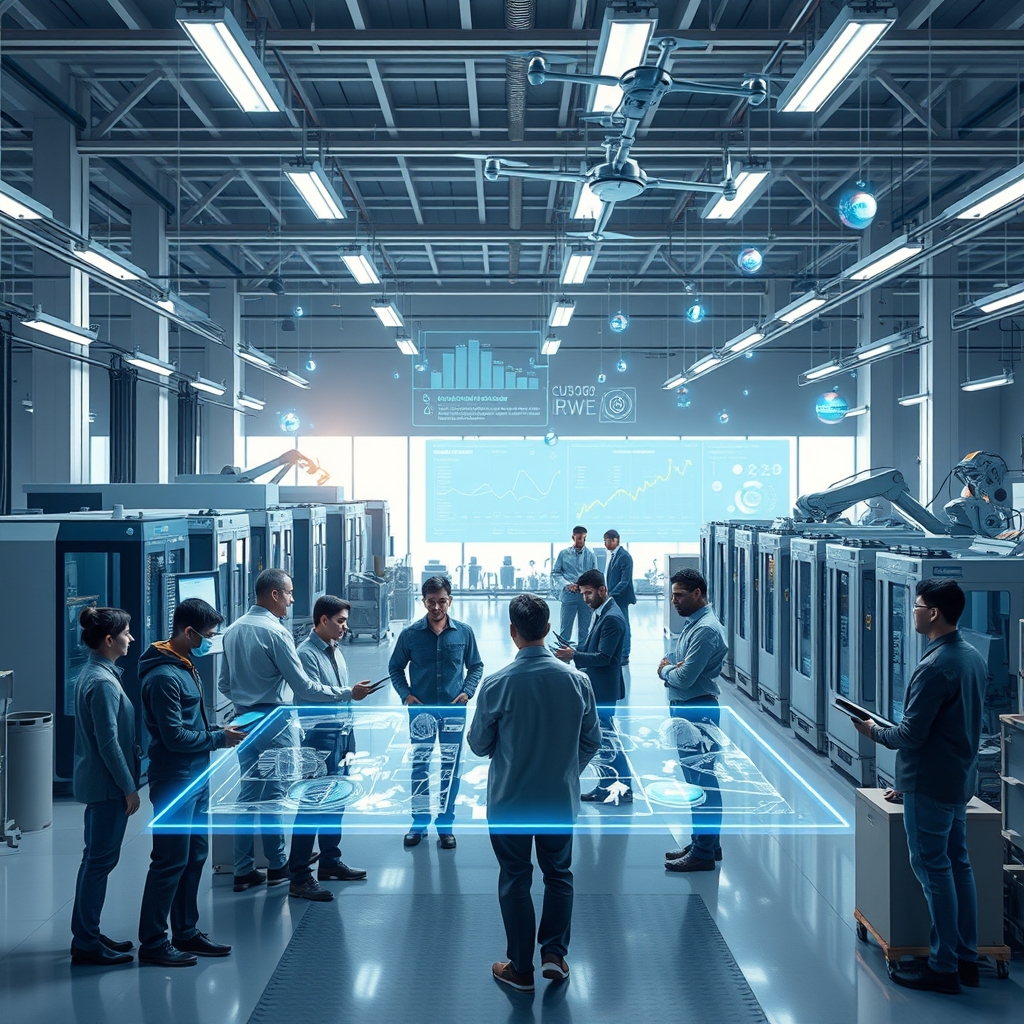
In an era where personalization and speed are not just valued but expected, traditional mass production models are struggling to keep pace. The rise of on-demand manufacturing is not merely a trend—it’s a fundamental shift in how businesses approach custom production ordering. By leveraging advanced technologies like automated order management and digital supply networks, companies are now able to produce goods with unprecedented flexibility, efficiency, and precision. This transformation is reshaping industries, from automotive and aerospace to fashion and consumer electronics, by enabling them to respond dynamically to market demands without the constraints of large-scale inventory or rigid production schedules.
The Shift from Mass Production to On-Demand Flexibility
For decades, mass production dominated the manufacturing landscape, driven by economies of scale that prioritized high-volume, low-cost output. While this model was efficient for standardized products, it left little room for customization or rapid adaptation to changing consumer preferences. Enter on-demand manufacturing, a paradigm that flips the script by allowing businesses to produce goods only when they are needed, in the exact quantities required. This approach eliminates the risks associated with overproduction, reduces waste, and significantly cuts down on storage costs.
At the heart of this shift is the integration of enterprise procurement platforms and cloud manufacturing platforms, which enable seamless collaboration between designers, manufacturers, and suppliers. These platforms act as a bridge, connecting digital design files directly to production systems, thereby streamlining the entire custom production ordering process. For example, a company can now upload a 3D model of a custom part, receive instant quotes from multiple manufacturers, and place an order—all within a matter of hours. This level of agility was unthinkable in the era of mass production, where lead times could stretch into months.
The Role of Automation in Streamlining Orders
One of the most significant enablers of on-demand manufacturing is automated order management. By automating repetitive tasks such as order entry, invoicing, and manufacturing order tracking, businesses can reduce human error, accelerate processing times, and free up resources for more strategic activities. Automation also plays a critical role in purchase order automation, where systems can generate, approve, and track orders without manual intervention. This not only speeds up the procurement process but also ensures greater accuracy and compliance with contractual terms.
For instance, production scheduling software can dynamically adjust manufacturing schedules based on real-time demand signals, ensuring that resources are allocated efficiently. This is particularly valuable in industries like automotive, where just-in-time (JIT) ordering is essential to maintaining lean inventories. By integrating inventory restocking systems with automated order management, businesses can maintain optimal stock levels without the need for excessive safety buffers, further reducing costs and improving cash flow.
Digital Supply Networks: The Backbone of On-Demand Manufacturing
The concept of digital supply networks extends beyond individual companies, creating an interconnected ecosystem where suppliers, manufacturers, and logistics providers collaborate in real time. These networks leverage data analytics, IoT devices, and AI to provide end-to-end visibility into the supply chain, from raw material sourcing to final delivery. For businesses engaged in contract manufacturing orders or wholesale production ordering, this level of transparency is invaluable, as it allows them to monitor production progress, anticipate delays, and make data-driven decisions.
Consider the case of a fashion retailer using print-on-demand services to produce custom apparel. Instead of forecasting demand months in advance and risking unsold inventory, the retailer can now produce garments only after an order is placed. This not only reduces waste but also allows for greater experimentation with designs and trends. Similarly, in the realm of rapid prototyping orders, engineers can iterate on designs quickly and cost-effectively, accelerating the product development cycle and bringing innovations to market faster.
Custom Fabrication and the Future of Industrial Order Fulfillment
The demand for custom fabrication services is growing across industries, from aerospace components to bespoke furniture. On-demand manufacturing enables these services by providing the tools and infrastructure needed to produce highly specialized parts with tight tolerances and unique specifications. Cloud manufacturing platforms play a pivotal role here, offering access to a global network of fabrication experts and advanced machinery, such as CNC mills, 3D printers, and laser cutters. This democratizes access to high-quality manufacturing, allowing even small businesses to compete with larger players.
Moreover, the integration of original equipment ordering with on-demand manufacturing is creating new opportunities for businesses to source parts and components more efficiently. Instead of relying on a single supplier, companies can now tap into a diverse network of manufacturers, reducing dependency risks and ensuring continuity of supply. This is particularly critical in industries where disruptions—whether from geopolitical tensions, natural disasters, or pandemics—can have cascading effects on production and delivery timelines.
The Environmental and Economic Benefits of On-Demand Manufacturing
Beyond the operational advantages, on-demand manufacturing also offers significant environmental benefits. By producing goods only when they are needed, businesses can drastically reduce waste, lower energy consumption, and minimize their carbon footprint. This aligns with the growing consumer demand for sustainable products and practices, as well as regulatory pressures to adopt greener manufacturing processes. For example, companies using batch production services can optimize their production runs to minimize material waste, while those leveraging just-in-time ordering can reduce the need for excess inventory, which often ends up in landfills.
Economically, on-demand manufacturing levels the playing field for businesses of all sizes. Small and medium-sized enterprises (SMEs) no longer need to invest in expensive tooling or large production runs to bring their products to market. Instead, they can leverage cloud manufacturing platforms to access the same high-quality production capabilities as larger competitors, paying only for what they need. This reduces barriers to entry and fosters innovation, as more players can experiment with new ideas without the fear of costly failures.
The transition to on-demand manufacturing is not without its challenges. Businesses must invest in the right technologies, upskill their workforce, and adapt their supply chain strategies to fully realize the benefits. However, those that embrace this shift will find themselves better positioned to navigate the complexities of modern manufacturing. As consumer expectations continue to evolve and the pace of innovation accelerates, the ability to produce goods quickly, efficiently, and sustainably will no longer be a competitive advantage—it will be a necessity. The factories of the future are not just automated; they are agile, responsive, and built for a world where customization and speed are the new standards of excellence.



