
Lean Production in the Digital Age: How Smart Factories Are Redefining Efficiency and Sustainability
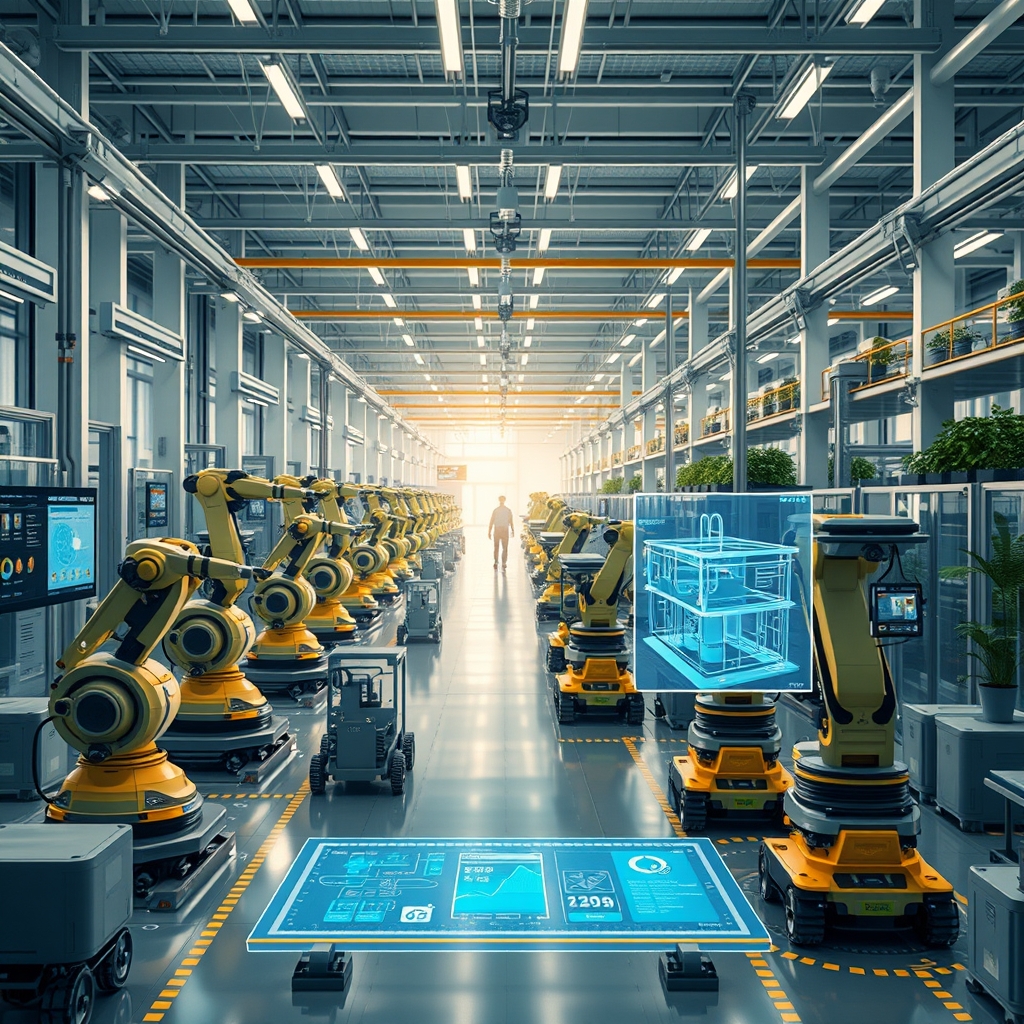
In an era where industrial competitiveness is no longer just about scale but also agility and sustainability, lean production has evolved from a set of principles into a dynamic, technology-driven discipline. The fusion of lean methodologies with smart manufacturing is transforming factories into highly responsive, waste-minimizing ecosystems that not only boost productivity but also align with global sustainability goals. This shift is not merely incremental—it’s a fundamental reimagining of how value is created, delivered, and sustained in modern industry.
The Core Principles of Lean Production
Lean production, originally pioneered by Toyota in the mid-20th century, is built on the philosophy of eliminating waste—whether in time, materials, or effort—while maximizing customer value. The seven classic types of waste (overproduction, waiting, transport, overprocessing, inventory, motion, and defects) remain relevant, but the tools to address them have undergone a digital revolution. Today, lean is no longer confined to physical workflows; it is deeply integrated with data analytics, real-time monitoring, and predictive algorithms that anticipate inefficiencies before they occur.
From Kaizen to Continuous Digital Improvement
The concept of kaizen, or continuous improvement, has been a cornerstone of lean production. Traditionally, this involved employee suggestions, process audits, and incremental changes. However, in smart factories, kaizen is amplified by artificial intelligence and machine learning. For instance, AI-driven process mining tools analyze production logs to identify bottlenecks, while digital twins simulate entire production lines to test improvements without disrupting operations. This shift from reactive to predictive kaizen enables manufacturers to achieve unprecedented levels of efficiency and adaptability.
Smart Manufacturing: The Engine of Lean 4.0
Smart manufacturing leverages Industrial Internet of Things (IIoT) devices, cloud computing, and advanced analytics to create self-optimizing production environments. Sensors embedded in machinery collect real-time data on performance, energy consumption, and product quality, feeding it into centralized platforms where AI algorithms detect patterns and anomalies. This data-driven approach allows manufacturers to implement lean principles at scale, reducing waste across the entire value chain.
Predictive Maintenance and Asset Lifecycle Management
One of the most impactful applications of smart manufacturing in lean production is predictive maintenance. By analyzing vibration, temperature, and acoustic data from equipment, AI models can predict failures before they happen, allowing for timely interventions that prevent costly downtime. This not only extends the lifespan of assets but also reduces the need for excessive spare parts inventory—a common source of waste in traditional manufacturing. Asset lifecycle management, when integrated with predictive analytics, ensures that every piece of equipment operates at peak efficiency throughout its useful life.
Inventory Optimization and Just-in-Time 2.0
The just-in-time (JIT) inventory system, a hallmark of lean production, has also been transformed by digital technologies. Advanced Material Requirements Planning (MRP) systems, powered by AI, now forecast demand with greater accuracy, reducing the risk of overstocking or stockouts. Warehouse robotics and automated guided vehicles (AGVs) further streamline JIT operations by enabling faster, more precise material handling. The result is a leaner, more responsive supply chain that minimizes waste while maintaining high service levels.
Sustainability: The New Frontier of Lean Production
As global pressure mounts to reduce carbon footprints and adopt circular economy principles, lean production is increasingly being viewed through the lens of sustainability. Smart factories are not only more efficient but also greener, thanks to technologies that optimize energy use, reduce material waste, and enable closed-loop recycling. For example, digital twin technology can simulate the environmental impact of production processes, allowing manufacturers to identify opportunities for reducing emissions and resource consumption.
Green Manufacturing and Sustainable Packaging
Lean production and green manufacturing are natural allies. By eliminating waste, lean methodologies inherently reduce the environmental impact of manufacturing. However, the integration of smart technologies takes this a step further. For instance, AI-driven quality control systems can detect defects early in the production process, reducing the need for rework and scrap. Similarly, sustainable packaging solutions—such as biodegradable materials or reusable containers—are being optimized using digital tools that balance cost, functionality, and environmental impact.
Agile Manufacturing for a Circular Economy
Agile manufacturing, which emphasizes flexibility and rapid response to market changes, is another key enabler of sustainable lean production. By adopting modular production lines and mass customization techniques, manufacturers can reduce overproduction and excess inventory. Additionally, digital platforms facilitate the tracking and recovery of materials, supporting circular economy initiatives where products are designed for disassembly and recycling. This not only reduces waste but also creates new revenue streams from recovered materials.
The Role of Enterprise Resource Planning (ERP) in Lean Production
Modern ERP systems serve as the backbone of lean production in smart factories. By integrating data from finance, procurement, production, and logistics, ERP platforms provide a holistic view of operations, enabling better decision-making. Advanced ERP systems now incorporate AI and machine learning to automate routine tasks, such as demand forecasting and order processing, freeing up human resources to focus on strategic improvements. This integration ensures that lean principles are applied consistently across all functions, from raw material procurement to final product delivery.
Digital Twin Technology: The Ultimate Lean Tool
Digital twin technology, which creates virtual replicas of physical assets or processes, is perhaps the most powerful tool in the lean production toolkit. By simulating production scenarios in a digital environment, manufacturers can test changes without risking disruptions to real-world operations. This capability is particularly valuable for optimizing complex processes, such as those involving multiple production lines or supply chain partners. Digital twins also enable real-time monitoring and adjustment, ensuring that lean principles are continuously applied and refined.
The convergence of lean production and smart manufacturing is not just a trend—it’s a paradigm shift that is redefining the future of industry. By harnessing the power of data, automation, and AI, manufacturers can achieve levels of efficiency and sustainability that were once unimaginable. The factories of tomorrow will not only produce more with less but will also do so in a way that is harmonious with the planet. As technology continues to advance, the principles of lean production will remain timeless, but their application will become increasingly dynamic, adaptive, and impactful. The journey toward smarter, leaner, and greener manufacturing has only just begun, and the possibilities are as limitless as the innovation driving it forward.



