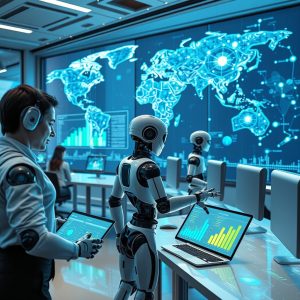
The Evolution of Corporate Governance in the Age of Enterprise Automation and AI

In an era where technology reshapes industries at an unprecedented pace, corporate governance is undergoing a profound transformation. The integration of enterprise automation and artificial intelligence (AI) is not just a trend but a necessity for organizations aiming to stay competitive, compliant, and resilient. This shift is redefining how businesses operate, make decisions, and interact with stakeholders, marking a new chapter in the history of corporate governance.
The Foundation of Modern Corporate Governance
Traditionally, corporate governance has been about ensuring accountability, transparency, and fairness in an organization’s relationship with its stakeholders. It encompasses the systems, processes, and policies that guide decision-making, risk management, and ethical behavior. However, as businesses grow more complex and globalized, traditional governance frameworks are struggling to keep up with the demands of the digital age.
The rise of enterprise automation—powered by AI, machine learning, and robotic process automation (RPA)—is addressing these challenges by streamlining operations, reducing human error, and enhancing efficiency. Automation tools are now capable of handling repetitive tasks, such as compliance reporting, audit trails, and data analysis, freeing up human resources to focus on strategic initiatives. This shift is not merely about cost savings; it’s about creating a more agile and responsive governance structure.
AI as the Catalyst for Smarter Governance
Artificial intelligence is playing a pivotal role in modernizing corporate governance by introducing predictive analytics, real-time monitoring, and data-driven decision-making. AI systems can analyze vast amounts of data to identify patterns, detect anomalies, and predict potential risks before they escalate. For instance, AI-powered tools can monitor financial transactions in real time, flagging suspicious activities that may indicate fraud or non-compliance with regulations.
Moreover, AI is enhancing boardroom dynamics by providing executives with actionable insights. Tools like natural language processing (NLP) can sift through regulatory documents, legal texts, and market reports to extract relevant information, enabling faster and more informed decision-making. This level of intelligence is particularly valuable in industries with stringent regulatory requirements, such as finance, healthcare, and energy, where compliance is non-negotiable.
The Role of Automation in Risk Management
Risk management is a cornerstone of corporate governance, and automation is revolutionizing how organizations approach it. Traditional risk management relies heavily on manual processes, which are not only time-consuming but also prone to errors. Enterprise automation tools, however, can continuously monitor risks across the organization, from cybersecurity threats to supply chain disruptions, and provide real-time alerts.
For example, AI-driven risk assessment platforms can simulate various scenarios to predict the impact of potential risks on business operations. This proactive approach allows organizations to mitigate risks before they materialize, ensuring business continuity and protecting shareholder value. Additionally, automation can standardize risk reporting, making it easier for boards and executives to assess the organization’s risk exposure and make data-driven decisions.
Enhancing Transparency and Stakeholder Trust
Transparency is a key pillar of effective corporate governance, and automation is making it easier for organizations to uphold this principle. Automated systems can generate detailed audit trails, ensuring that every decision and transaction is documented and traceable. This level of transparency is crucial for building trust with stakeholders, including investors, customers, and regulators.
Furthermore, AI can help organizations communicate more effectively with their stakeholders. For instance, chatbots and virtual assistants can provide real-time updates on governance-related matters, such as compliance status or sustainability initiatives. This not only improves stakeholder engagement but also reinforces the organization’s commitment to ethical and responsible governance.
The Challenges of Integrating AI and Automation into Governance
While the benefits of enterprise automation and AI in corporate governance are undeniable, their integration is not without challenges. One of the primary concerns is the ethical use of AI. Organizations must ensure that their AI systems are transparent, unbiased, and aligned with ethical standards. This requires robust governance frameworks that address issues such as data privacy, algorithmic fairness, and accountability.
Another challenge is the skills gap. As organizations adopt automation and AI, there is a growing need for professionals who can manage and oversee these technologies. This includes not only technical skills but also an understanding of governance principles and regulatory requirements. Investing in upskilling and reskilling programs is essential to bridge this gap and ensure a smooth transition to automated governance.
The Future of Governance: A Human-AI Collaboration
The future of corporate governance lies in the collaboration between humans and AI. While automation can handle repetitive tasks and data analysis, human judgment remains irreplaceable in areas such as ethical decision-making, strategic planning, and stakeholder relations. The goal is not to replace human governance but to augment it with AI-driven insights and efficiency.
Organizations that successfully integrate AI and automation into their governance frameworks will be better positioned to navigate the complexities of the digital age. They will be more agile, resilient, and capable of making informed decisions that drive long-term value. As technology continues to evolve, so too will the principles and practices of corporate governance, ensuring that businesses remain not only competitive but also responsible and sustainable in an ever-changing world.
The journey toward automated and AI-driven governance is not just about adopting new technologies; it’s about reimagining the very foundations of how organizations operate. Those who embrace this transformation will lead the way in shaping a future where governance is not just a compliance requirement but a strategic advantage.