
The Convergence of AI and Circular Economy: How Predictive Modeling is Driving Sustainable Innovation in Corporate Strategy
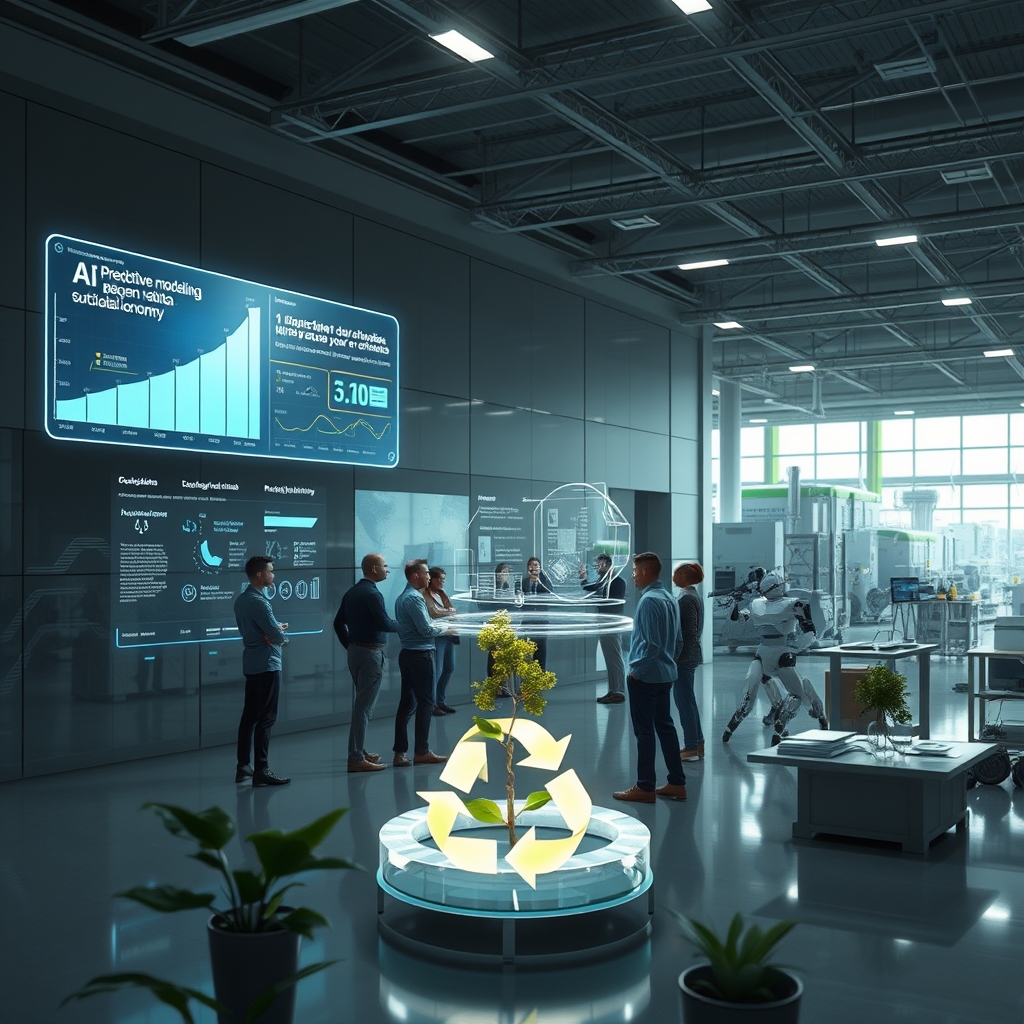
The intersection of artificial intelligence (AI) and the circular economy represents one of the most transformative opportunities for businesses seeking to align profitability with sustainability. As global pressure mounts to reduce waste, optimize resource use, and minimize environmental impact, companies are turning to AI-driven predictive modeling to reimagine their operations. This shift is not merely about compliance or corporate social responsibility—it’s about redefining value creation in a world where sustainability is no longer optional but a core competitive advantage.
Rethinking Resource Efficiency with AI
Traditional linear economies follow a “take-make-dispose” model, which is inherently unsustainable in a world of finite resources. The circular economy, by contrast, emphasizes designing out waste, keeping products and materials in use, and regenerating natural systems. AI enhances this approach by enabling businesses to predict demand, optimize material flows, and identify opportunities for reuse, refurbishment, or recycling before waste is even generated.
Predictive modeling, powered by machine learning algorithms, analyzes vast datasets—from supply chain logistics to consumer behavior—to forecast trends with unprecedented accuracy. For example, a fashion retailer can use AI to predict which garments will be returned, allowing them to preemptively redirect those items into resale or upcycling channels rather than landfills. Similarly, manufacturers can leverage AI to anticipate equipment failures, enabling proactive maintenance that extends the lifespan of machinery and reduces the need for new raw materials.
The Role of Data Analytics in Closing the Loop
At the heart of the circular economy is the concept of closed-loop systems, where waste from one process becomes input for another. AI-driven data analytics makes this possible by providing real-time visibility into every stage of the product lifecycle. Companies can track materials from sourcing to disposal, identifying inefficiencies and opportunities for circularity.
For instance, AI can analyze the composition of electronic waste to determine the most efficient methods for recovering valuable metals like gold, silver, and rare earth elements. This not only reduces the environmental impact of mining but also creates new revenue streams from what was once considered waste. In the automotive industry, predictive modeling helps companies design vehicles with recyclability in mind, ensuring that up to 95% of a car’s materials can be recovered and reused at the end of its life.
Sustainable Development Meets Enterprise Automation
The integration of AI into circular economy strategies is also accelerating sustainable development goals (SDGs). By automating the analysis of environmental, social, and governance (ESG) metrics, companies can align their operations with global sustainability targets while maintaining profitability. AI-driven enterprise automation tools can simulate the environmental impact of different business decisions, allowing leaders to choose the most sustainable path without sacrificing efficiency.
Consider the case of a consumer goods company using AI to optimize its packaging. Predictive models can determine the minimal amount of material required to protect a product during shipping, reducing waste while cutting costs. Additionally, AI can analyze consumer behavior to predict which sustainable packaging options—such as biodegradable or reusable materials—will resonate most with customers, further driving adoption and brand loyalty.
From Predictive Modeling to Proactive Sustainability
The true power of AI in the circular economy lies in its ability to shift businesses from reactive to proactive sustainability. Instead of waiting for regulatory pressures or consumer demands to force change, companies can use predictive modeling to anticipate future trends and adapt their strategies accordingly. For example, AI can forecast the impact of climate change on supply chains, allowing businesses to diversify sourcing or invest in resilient infrastructure before disruptions occur.
Moreover, AI enables hyper-personalization in sustainability efforts. By analyzing individual consumer preferences, companies can tailor their circular economy initiatives—such as offering personalized recycling incentives or recommending second-hand products that align with a customer’s style. This not only enhances customer experience but also fosters a culture of sustainability that extends beyond the corporate sphere.
Challenges and Ethical Considerations
While the potential of AI in driving the circular economy is immense, it is not without challenges. Data privacy concerns, the energy consumption of AI systems, and the risk of algorithmic bias are critical issues that must be addressed. Companies must ensure that their AI-driven sustainability efforts are transparent, equitable, and aligned with ethical standards. This requires collaboration between technologists, policymakers, and sustainability experts to create frameworks that balance innovation with responsibility.
Another challenge is the need for cross-industry collaboration. The circular economy thrives on interconnected systems, where the waste of one industry becomes the raw material of another. AI can facilitate this by identifying synergies between sectors, but it requires a willingness to share data and resources—a shift that many companies may initially resist due to competitive concerns. However, those that embrace collaboration will be best positioned to lead the transition to a circular economy.
As businesses navigate this evolving landscape, the convergence of AI and the circular economy offers a blueprint for a more sustainable and resilient future. By harnessing the power of predictive modeling, companies can turn sustainability from a cost center into a driver of innovation and growth. The question is no longer whether businesses can afford to invest in AI-driven circularity, but whether they can afford not to. The shift is underway, and those who act decisively will shape the future of industry, the environment, and society at large.



