
The Future of Smart Manufacturing: How Digital Twin Technology is Revolutionizing Industrial Automation
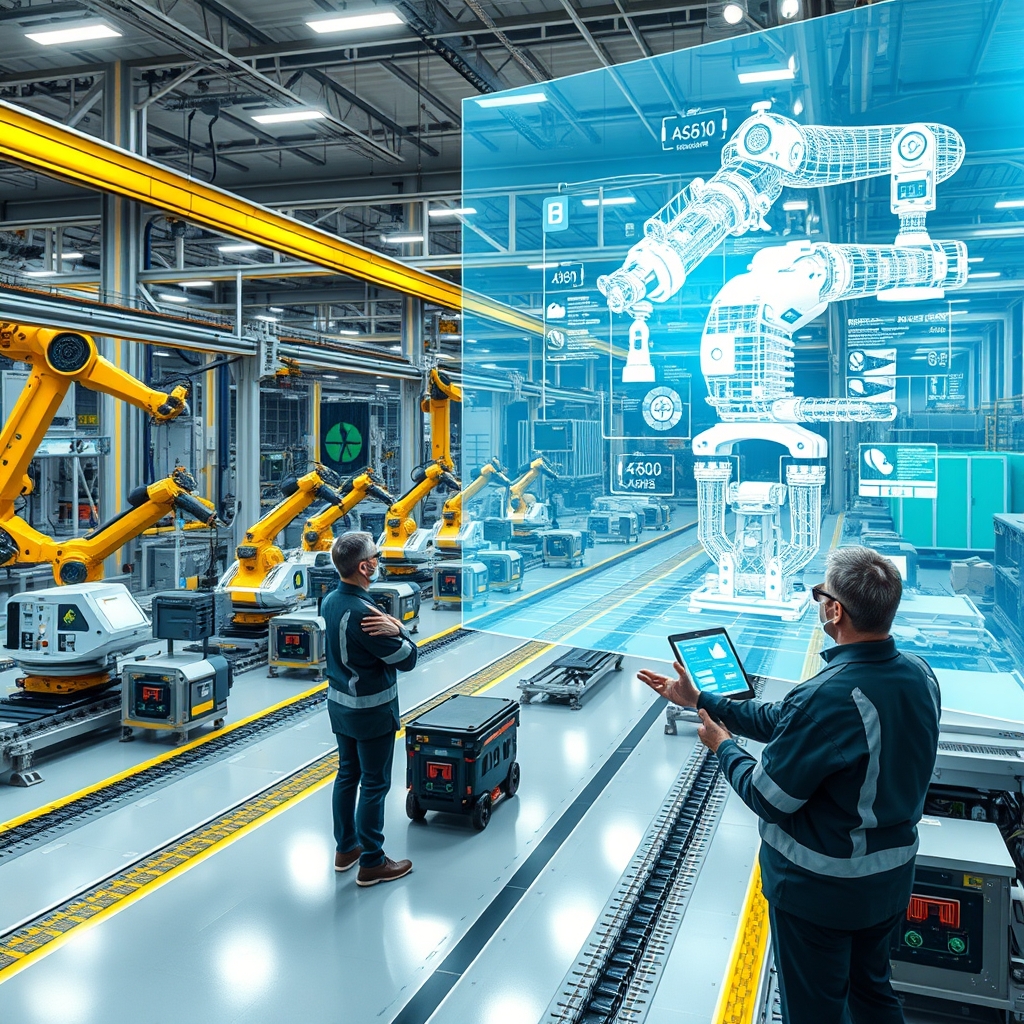
The landscape of modern manufacturing is undergoing a seismic shift, driven by advancements in technology that promise to redefine efficiency, precision, and sustainability. At the heart of this transformation lies Digital Twin Technology, a groundbreaking innovation that is rapidly becoming a cornerstone of smart manufacturing and industrial automation. By creating virtual replicas of physical systems, digital twins enable manufacturers to simulate, analyze, and optimize processes in ways that were previously unimaginable. This article explores how digital twin technology is reshaping the manufacturing sector, its applications across various domains, and the challenges that lie ahead.
The Concept of Digital Twin Technology
A digital twin is a dynamic, real-time digital representation of a physical object, system, or process. Unlike traditional simulations, which are often static and limited in scope, digital twins are continuously updated with data from sensors, IoT devices, and other sources. This allows them to mirror the current state of their physical counterparts with remarkable accuracy. The concept was first introduced by NASA in the 1960s to improve spacecraft design and maintenance, but it has since evolved into a powerful tool for industries ranging from automotive to aerospace and beyond.
In the context of factory automation, digital twins serve as a bridge between the physical and digital worlds. They enable manufacturers to monitor equipment performance, predict failures, and test changes in a virtual environment before implementing them in the real world. This not only reduces downtime but also minimizes risks associated with trial-and-error approaches. For example, a digital twin of a production line can simulate the impact of a new machine or workflow, allowing engineers to identify potential bottlenecks or inefficiencies before making costly investments.
Applications in Smart Manufacturing
Predictive Maintenance
One of the most compelling applications of digital twin technology is in predictive maintenance. By analyzing real-time data from sensors embedded in machinery, digital twins can detect anomalies and predict equipment failures before they occur. This proactive approach contrasts sharply with traditional reactive maintenance, where repairs are only conducted after a breakdown. For manufacturers, the benefits are substantial: reduced downtime, lower maintenance costs, and extended asset lifecycles. Companies like Siemens and GE have already implemented digital twin-based predictive maintenance systems, reporting significant improvements in operational efficiency.
Lean Production and Inventory Optimization
Digital twins also play a pivotal role in lean production and inventory optimization. By simulating production processes, manufacturers can identify waste, streamline workflows, and optimize resource allocation. For instance, a digital twin of a warehouse can help managers visualize inventory levels, forecast demand, and automate replenishment processes. This not only reduces excess stock and storage costs but also ensures that materials are available when needed, minimizing production delays. In an era where supply chain disruptions are increasingly common, such capabilities are invaluable for maintaining resilience and agility.
Quality Control Systems
Ensuring product quality is a critical concern for manufacturers, and digital twins are proving to be a game-changer in this domain. By integrating data from quality control systems, digital twins can monitor production in real time, flagging deviations from standards and enabling immediate corrective action. For example, in the automotive industry, digital twins can track the assembly of components, ensuring that each part meets precise specifications. This level of oversight not only reduces defects but also enhances customer satisfaction and brand reputation.
Challenges and Considerations
While the potential of digital twin technology is undeniable, its adoption is not without challenges. One of the primary hurdles is the complexity of integrating digital twins into existing systems. Manufacturers must invest in robust enterprise resource planning (ERP) and material requirements planning (MRP) systems to ensure seamless data flow between physical and digital environments. Additionally, the sheer volume of data generated by digital twins requires advanced analytics capabilities, which may necessitate upskilling or hiring specialized talent.
Data security and privacy are also critical concerns. Digital twins rely on vast amounts of sensitive information, making them potential targets for cyberattacks. Manufacturers must implement stringent security protocols to protect their digital assets and ensure compliance with regulations such as GDPR and CCPA. Furthermore, the initial cost of deploying digital twin technology can be prohibitive for small and medium-sized enterprises (SMEs), though cloud-based solutions are gradually making the technology more accessible.
Sustainability and Green Manufacturing
Beyond operational efficiency, digital twins are also contributing to sustainable manufacturing practices. By optimizing energy consumption, reducing waste, and improving resource utilization, digital twins help manufacturers minimize their environmental footprint. For example, a digital twin of a factory can simulate the impact of different energy sources, enabling companies to transition to renewable energy or implement energy-efficient technologies. As sustainability becomes a key priority for businesses and consumers alike, digital twins are emerging as a vital tool for achieving green manufacturing goals.
The integration of digital twin technology into smart manufacturing is not merely a trend but a fundamental shift in how industries operate. As manufacturers continue to embrace automation, data-driven decision-making, and sustainability, digital twins will play an increasingly central role in shaping the future of production. The ability to simulate, analyze, and optimize processes in real time offers a competitive edge that is difficult to ignore. While challenges remain, the potential rewards—greater efficiency, reduced costs, and enhanced sustainability—make the journey toward digital transformation not just desirable, but essential for those who wish to thrive in the modern industrial landscape. The factories of tomorrow are being built today, and digital twins are the blueprint for their success.



