
The AI Blueprint for Sustainable Development: How Predictive Modeling is Accelerating the Circular Economy
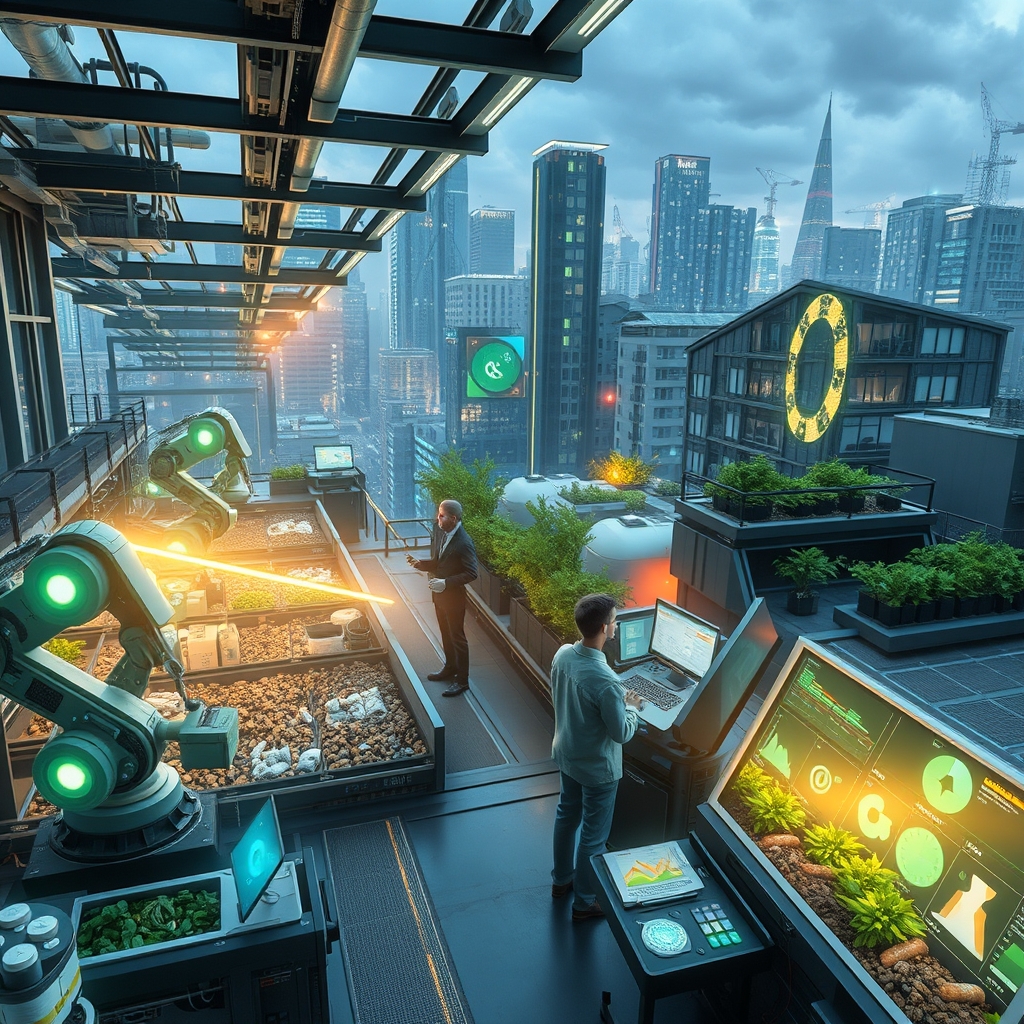
In an era where sustainability is no longer a choice but a necessity, businesses are increasingly turning to artificial intelligence to navigate the complexities of the circular economy. The traditional linear model of “take, make, dispose” is being replaced by a more regenerative approach, where waste is minimized, resources are reused, and environmental impact is drastically reduced. At the heart of this transformation lies predictive modeling—a powerful AI-driven tool that is reshaping how companies design, produce, and consume.
The Circular Economy: A Paradigm Shift
The circular economy represents a fundamental shift in how we think about production and consumption. Unlike the linear economy, which relies on finite resources and generates significant waste, the circular model emphasizes longevity, reuse, and recycling. However, transitioning to this model is not without its challenges. Businesses must rethink their supply chains, product designs, and business models to align with circular principles. This is where AI and predictive modeling come into play, offering data-driven insights that make sustainability not just achievable but also profitable.
Predictive Modeling: The Engine of Circular Innovation
Predictive modeling leverages vast amounts of data to forecast trends, optimize processes, and identify opportunities for improvement. In the context of the circular economy, this technology is proving to be a game-changer. For instance, AI can analyze consumer behavior to predict product lifecycles, enabling companies to design goods that are easier to repair, recycle, or repurpose. By anticipating demand and material availability, businesses can reduce overproduction, minimize waste, and lower their carbon footprint.
One of the most compelling applications of predictive modeling is in waste management. AI-powered systems can sort and process recyclable materials with unprecedented accuracy, reducing contamination and increasing the efficiency of recycling facilities. Companies like AMP Robotics are already using AI to automate the sorting of recyclables, making the process faster, cheaper, and more effective. This not only diverts waste from landfills but also creates new revenue streams from materials that were previously considered trash.
AI and the Future of Sustainable Product Design
Product design is another area where AI is making a significant impact. Traditionally, designers have relied on intuition and experience to create products that meet consumer needs. However, AI is introducing a new level of precision by analyzing data on material properties, environmental impact, and consumer preferences. This enables companies to design products that are not only sustainable but also highly desirable to consumers.
For example, AI can simulate the environmental impact of different materials and manufacturing processes, allowing designers to make informed choices that reduce waste and energy consumption. Companies like Adidas are using AI to create sneakers made from recycled ocean plastic, while IKEA is leveraging predictive modeling to design furniture that can be easily disassembled and recycled. These innovations are not just good for the planet—they also resonate with consumers who are increasingly prioritizing sustainability in their purchasing decisions.
The Role of AI in Supply Chain Resilience
A circular economy requires a resilient and adaptable supply chain. AI is helping businesses achieve this by providing real-time insights into supply chain dynamics. Predictive modeling can forecast disruptions, optimize logistics, and identify alternative sources of materials. This is particularly important in a world where climate change, geopolitical tensions, and pandemics can disrupt supply chains at any moment.
For instance, AI can analyze weather patterns to predict potential disruptions in the supply of raw materials. It can also identify opportunities to source materials locally, reducing transportation emissions and supporting regional economies. By making supply chains more transparent and efficient, AI is helping businesses build resilience while advancing their sustainability goals.
Overcoming the Challenges of AI-Driven Sustainability
While the potential of AI in the circular economy is immense, it is not without its challenges. One of the biggest hurdles is the quality and availability of data. Predictive modeling relies on large datasets, and many companies struggle to collect and analyze the information needed to make accurate predictions. Additionally, there are ethical considerations around data privacy and the potential for AI to reinforce existing biases.
Another challenge is the need for collaboration across industries. The circular economy requires a systemic approach, where businesses, governments, and consumers work together to create a sustainable future. AI can facilitate this collaboration by providing a common platform for sharing data and insights. However, it also requires a cultural shift, where sustainability is prioritized over short-term profits.
Despite these challenges, the benefits of AI-driven sustainability are undeniable. Companies that embrace predictive modeling and the circular economy are not only reducing their environmental impact but also gaining a competitive edge. Consumers are increasingly demanding sustainable products, and businesses that fail to adapt risk being left behind. Moreover, governments are introducing regulations that incentivize circular practices, making sustainability a smart business strategy as well as an ethical imperative.
The journey toward a circular economy is complex, but AI is providing the tools needed to make it a reality. By harnessing the power of predictive modeling, businesses can design products that last longer, reduce waste, and create value from materials that were once discarded. This is not just a technological revolution—it is a fundamental rethinking of how we produce, consume, and live. As AI continues to evolve, its role in driving sustainable development will only become more critical, offering a blueprint for a future where economic growth and environmental stewardship go hand in hand.



